
Health & Wellness
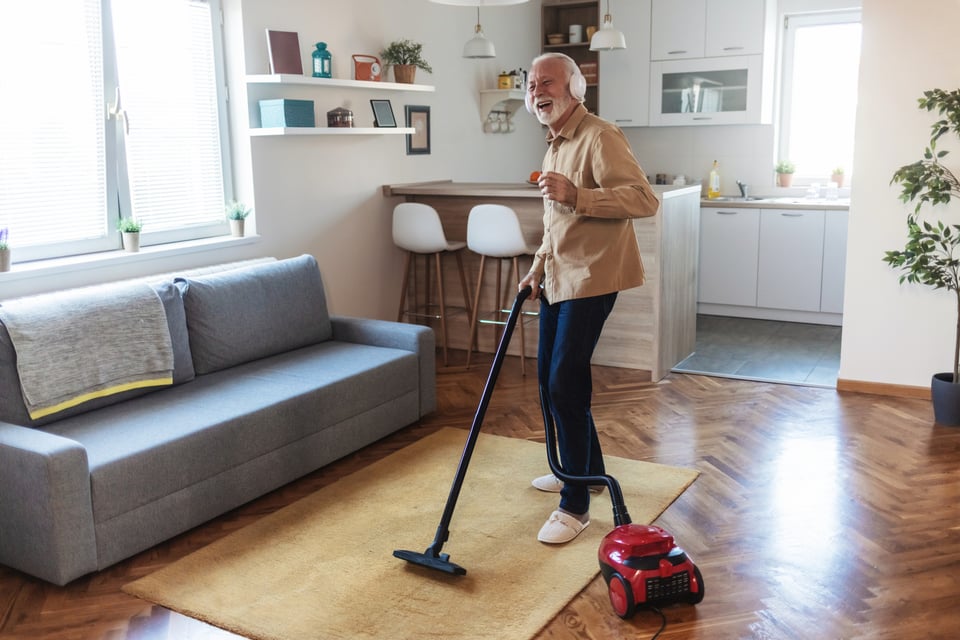 Chores rarely top anyone’s list of favorite activities. Cleaning the house, doing laundry, or squeezing in a workout can easily feel like the least exciting tasks of the day. Research even shows that people tend to favor immediate rewards over long-term goals. But what if everyday chores could offer more than a checked-off task — and even bring a little joy along the way?
They can! The secret is weaving purposeful movement into routine activities. By adding small bursts of motion to everyday tasks, you can keep the household running while also supporting your health, mobility, and overall well-being.
Play in every motion
Exercise classes, gyms, or structured workouts can be great, but they’re not the only way to support healthy movement. In fact, some of the most beneficial activities happen in ordinary moments throughout the day.
That’s good news for older adults and caregivers alike. Everyday activities – sweeping the floor, putting away laundry, watering plants, or even cooking –
can support mobility, balance, and emotional well-being. With a little creativity, daily chores can become opportunities for energy, laughter, and connection.
And what better moment to celebrate joyful movement than International Dance Day on April 29?
Movement that happens naturally
Health experts increasingly emphasize the value of regular, moderate movement woven into daily routines. The World Health Organization recommends that adults aged 65 and older engage in at least 150 minutes of moderate physical activity each week, along with activities that support balance and strength.
But movement doesn’t need to happen all at once.
Research shows that short bursts of activity spread throughout the day can provide meaningful health benefits. In just two minutes a day, you could lower your risk of heart disease, cancer, and even early death. Small vigorous actions help support muscle strength, improve circulation, and support joint flexibility. Even light movement helps reduce the risk of falls.
Daily tasks often involve the same functional movements recommended in exercise programs:
- Reaching
- Bending
- Lifting
- Walking
- Rotating the torso
By approaching these everyday motions with a playful mindset, routine chores can double as physical activity.
One of the best things about movement through chores is that it can be easily adapted. For those with limited mobility, activities can be done while seated. Folding laundry, organizing drawers, or wiping surfaces can still engage the arms and core muscles.
Turning chores into cheer
Many household tasks already involve natural movement. A few simple tweaks can make them more energizing and enjoyable:
- Wiping down kitchen counters? Create a countertop dance break. Turn on music to twist and sway; you’re promoting spinal mobility, core strength, and lymphatic flow while you clean.
- Need to water the plants? Walk heel-toe as you move from plant to plant; the plants get hydrated, and you improve balance, coordination, and postural stability.
- Dusting and straightening? Make everything look pristine while you give yourself a full body workout: incorporate squats while picking up items, calf raises for high shelves, and lunges when moving between furniture.
These small changes add movement without requiring extra time or special equipment.
Don’t forget the music! Research consistently shows that music can boost mood and motivation during physical activity. “Studies have found significantly higher dopamine release and reward center activation when people listen to their favorite songs,” Kyoung Shin Park, associate professor at Emory University’s School of Medicine, told the LA Times. It makes movement feel easier and more enjoyable.
Making movement social
Caregivers, family members, and friends can help turn routine tasks into moments of connection. A quick kitchen dance break, a shared playlist while tidying up, or a playful challenge to “beat the dusting timer” can transform chores into something people look forward to. This kind of shared activity offers more than physical benefits. Social engagement has been linked to better emotional health and cognitive function in older adults. When people laugh, talk, and move together, they strengthen both their bodies and their relationships.
At Home Care Assistance, caregivers often help incorporate movement into daily routines in natural ways. Whether it’s taking a short walk during errands, stretching while preparing meals, or enjoying a spontaneous dance break, small moments of activity can make a meaningful difference. Because sometimes the best exercise doesn’t feel like exercise at all. Sometimes it just feels like fun.
Silly Circuit Builder
Turn chores into a mini movement game
Step 1: Pick 2–3 chore-inspired movements below.
Step 2: Do each one for 30–45 seconds.
Step 3: Repeat the circuit 2–3 times while tidying up.
Silly walk delivery: Carry items to their proper place using a different walk for each room (marching, tiptoeing, gentle dancing, taking big slow steps, etc.).
Laundry catch: While sorting laundry, lightly toss the item from one hand to the other before placing it in the basket.
Reach and stack: When putting away dishes or pantry items, reach up high, then down low, alternating arms each time you place something away.
Broom balance: Hold a broom or mop handle lightly and pretend you are singing into a microphone; practice standing tall while shifting your weight from one foot to the other and/or leaning.
Countertop dance break: Twist and sway to music as you wipe down countertops.
###
Sources: The Atlantic; Princeton; WHO; Harvard; LA Times


.webp?width=352&name=download%20(3).webp)