
Health & Wellness
 Can You Picture This?
Every photo tells a story.
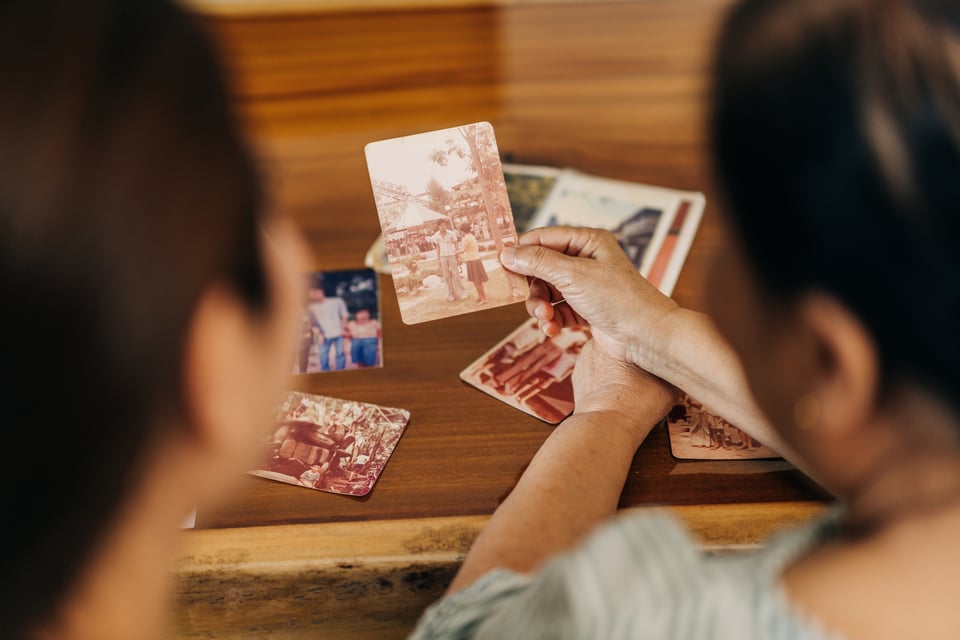
Sometimes it's a carefully composed image of a sunset or a family holiday gathering. Other times it's a blurry snapshot from the chaos of a child’s birthday party or a quick picture taken on a smartphone of a stranger’s garden. Regardless of how polished the image may be, photographs have a unique ability to capture moments, preserve memories, and spark meaningful conversations. As World Photo Day approaches on August 19, it's a wonderful time to explore how photos can help everyone – especially older adults – stay socially connected and engaged.
Why photos matter
Photographs do more than preserve memories. Like any art form, photography allows people to express what they value, notice, remember, and want to share with others. And recreational arts have been directly tied to aging well: a recent Australian study found that those who took part in the arts had significantly better mental and physical health. Photographs specifically increase older adults' connection to place, creativity, and overall well-being.
Of course, a single image can communicate a story, spark a memory, or start a conversation that brings people closer together. That matters because connection plays an important role in healthy aging. According to the World Health Organization, social connection and meaningful engagement can reduce inflammation, lower the risk of serious health problems, foster mental health, and prevent early death. Social isolation and loneliness, on the other hand, were both associated with a higher mortality risk (32% and 14%, respectively). Activities that encourage conversation, reflection, and relationship-building can help older adults.
Photos to start conversations
Photos are a natural starting point for connection. But, when people hear "photography," they sometimes imagine expensive cameras or artistic ability. In reality, there is no right or wrong photo to share. The most meaningful photos are often the simplest. Photos can come from:
- A smartphone camera
- An old family album
- Printed photographs stored in boxes
- Newspaper clippings or community photos
- Social media posts shared by family members
- Framed pictures displayed around the home
- Vacation albums
- School or other community pictures
Every image holds the potential to spark a memory, tell a story, or start a conversation.
To start a conversation, sometimes all it takes is a simple question. Here are five easy ways to use photos to connect with friends, family members, neighbors, and other loved ones.
- Share a photo that makes you smile. Choose a picture that always brings you joy. Maybe it's a family gathering, a wedding, a beloved pet, or a funny vacation moment.
Conversation starter: "What is happening in this photo, and why does it make you smile?"
- Revisit a favorite place. Find a photo of a location that was meaningful to you. It could be a childhood home, a favorite vacation destination, a neighborhood landmark, or a special fishing spot.
Conversation starter: "If you could step back into this photo for one day, what would you do?"
- Compare then to now. Pull out an older photograph and compare it with life today. This can lead to discussions about changing technology, fashions, traditions, neighborhoods, and family life.
Conversation starter: "What has changed the most since this photo was taken?"
- Introduce someone important. Choose a photo featuring a friend, mentor, family member, or neighbor who played a significant role in your life.
Conversation starter: "What is one lesson you learned from this person?"
- Celebrate everyday life. Not every meaningful photo has to come from the past. Share a recent photo of a flower blooming, a favorite meal, a pet, a hobby project, or a walk around the neighborhood.
Conversation starter: "What made this moment worth capturing?"
If you are looking for a straightforward way to connect with others, choose one photo to show to a friend, family member, neighbor, or loved one. Then invite them to do the same. Try sharing:
- A favorite childhood memory
- A place you would love to visit again
- Something that makes you laugh
- A photo that represents friendship
- A favorite meal or family recipe
- Something beautiful you noticed this week
- A photo that tells a story about your community
And sharing photos has never been easier. Loved ones can:
- Text photos directly from their phones
- Create shared family photo albums online
- Email favorite pictures
- Print photos to mail or bring during visits
- Create simple photo boards for special occasions
- Exchange a "photo of the week"
- Bring one meaningful photo to family gatherings and share its story
Even small, regular photo-sharing traditions can help people stay connected across distances and generations.
Caregivers boost connection
Caregivers often look for ways to create meaningful interactions, especially when conversation feels difficult or someone is having a quiet day. Photos can be a wonderful resource. Caregivers can:
- Ask open-ended questions about people, places, and events in photos
- Create themed conversations around travel, family, pets, or holidays
- Encourage storytelling without focusing on specific dates or details
- Use photos to discover interests and life experiences
- Invite clients to share favorite memories connected to images
- Create rotating photo displays that reflect important people and milestones
The goal is not to test memory or accuracy. Instead, photos can provide opportunities for connection, comfort, and conversation in the moment.
A photograph is much more than an image. It is a doorway to memories, relationships, experiences, and stories worth telling. Whether from a smartphone, an old family album, or a treasured print tucked away for decades, photos have the potential to bring people together. This World Photo Day, consider choosing just one photo and sharing the story behind it. You might be surprised where the conversation leads.
###
Sources: Frontiers in Public Health; Australasian Journal on Ageing; WHO; Centre for Ageing Better

.webp?width=352&name=download%20(5).webp)
.webp?width=352&name=download%20(27).webp)